
Recorded: 1992Notes on the Song
‘The Clear Winding Ayr was composed by a Glasgow policeman. It was the last song my mother gave me. She never gave me a song until she considered I was able to sing it properly.
‘I mind well an evening in 1966 two days before my father, God rest him, died. Sheila, my wife, was above in the room chatting to my father. The door to the kitchen was open and I was there coaxing the last two verses of The Clear Winding Ayr out of my mother. She went astray a couple of times in the last verses and we nearly fell out over the head of it. My father said to Sheila, “I hould you Paddy has got that song off her this evening at last!” Then, in 1968, I was doing a singing stint in Scotland. Wee Geordie McIntyre gave me a copy of Ford’s Vagabond Ballads of Scotland (1904). Damn it, wasn’t the whole song included in the collection and the yarn about the peeler who composed it and all, but the tune given in Ford was only for a four-lined verse and was a wee bit straight. My mother’s tune was for an eight-lined verse and the tune has runs in it like Banks of Dunmore, Craigie Hill and The Mountain Streams – her big songs. Ford states that no song s composed himself enjoyed the same popularity among the rural folk of the Lowlands that The Clear Winding Ayr won for itself. What attracted me was the fine tune and its great range, more than anything else, and the winding style in which my mother sang it’ (Paddy Tunney, The Stone Fiddle LP).
The heroine of the song was Mary Campbell of Dunoon. Mary and Burns were in love and their last meeting, on the 14th of May 1786, on the banks of the Fail, was truly a dramatic one: ‘Standing on either side of a purling brook, and holding a Bible between them, they exchanged vows of eternal fidelity’ (The Poetical Work of Robert Burns, 1867). Some believe that this was a form of matrimonial troth or pledge that bound the lovers together as tightly as an actual marriage.
Mary Campbell died unexpectedly that same year, probably of typhus. She is buried in the churchyard of the Old West Kirk in Greenock on a hill that overlooks the River Clyde. (JT)
The Singers
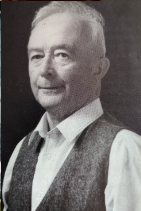
Paddy Tunney
Rec. 1992
The Song Texts
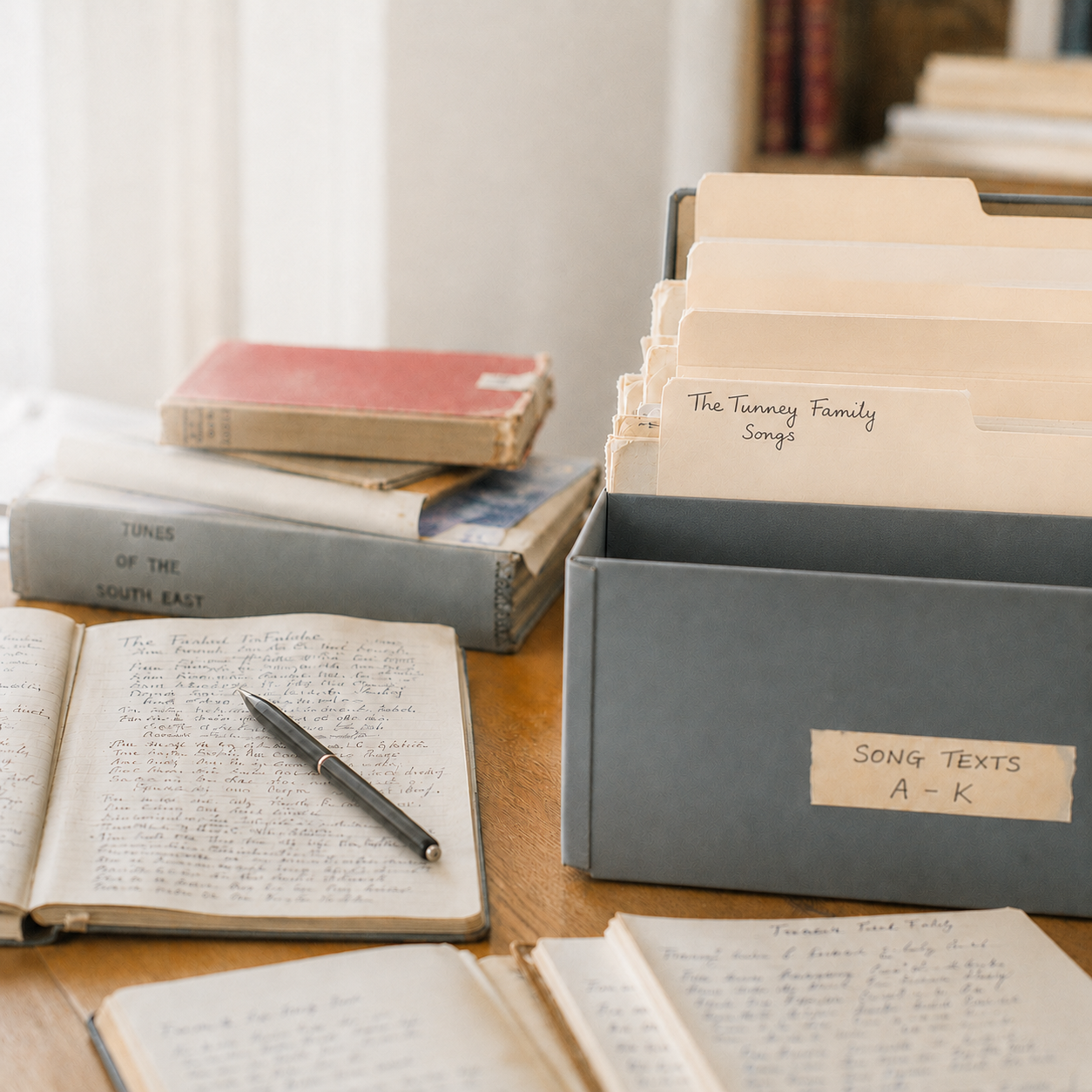
The Tunney Song Tradition Trust’s Archive of Song Texts preserves the words of traditional songs, offering a valuable resource for singers and anyone interested in the living song tradition.
Where the Linnets Sing 2026, developed by the Tunney Song Tradition Trust with Comhaltas Ceoltóirí Éireann, celebrates 75 Bliain ag Fás by bringing the original collection to a new online audience, enriched with fifteen additional tracks, eleven more voices and two further generations of the tradition.