MY CONOR HAS CHEEKS AS RED AS THE ROSES
Track 28
Notes on the Track (28)
Recorded: 1953Notes on the Song
When Seán O Boyle and Peter Kennedy recorded Annie Meehan for the BBC in 1953, she sang for them such songs as Lough Erne Shore, Moorlough Mary, As I Roved Out, The Wee Weaver, The Banks of Dunmore, and When a Man’s in Love. However, all of these appear to have been lost. Snatches of Early Early and I Wish I Were in Monaghan (The Jug of Punch) are on tape but only one complete song appears to have survived and that is what is included here. You can hear Seán O Boyle’s voice at the start of this track as he coaxes Annie to sing what she called My Conor has Cheeks as Red as the Roses though it is commonly called My Dear Irish Boy.
Annie’s words follow pretty closely the text published in The Songs of Ireland (1845) compiled by Michael Joseph Barry, who believed that it was the work of some ‘unknown hedgeschool master’. Barry was a writer, poet and enthusiastic Young Irelander. He was born in Cork in 1817 and claims to have often heard The Irish Boy sung ‘in my boyhood to a very sweet plaintive melody.’ That must have been around the 1820s making the song at least 200 years old; the ‘war’ referred to in the words would then likely be the Napoleonic Wars (1803-1815).
Samuel Lover also includes The Irish Boy in Lyrics of Ireland (1858) where, interestingly, it appears alongside a related though more ‘modern’ song entitled My Conor.
*The notes for songs 28-42, if not covered by earlier entries, have been compiled by John Tunney.
The Singers
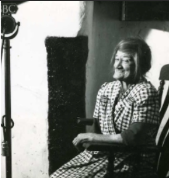
Annie Meehan
Rec. 1953
The Song Texts
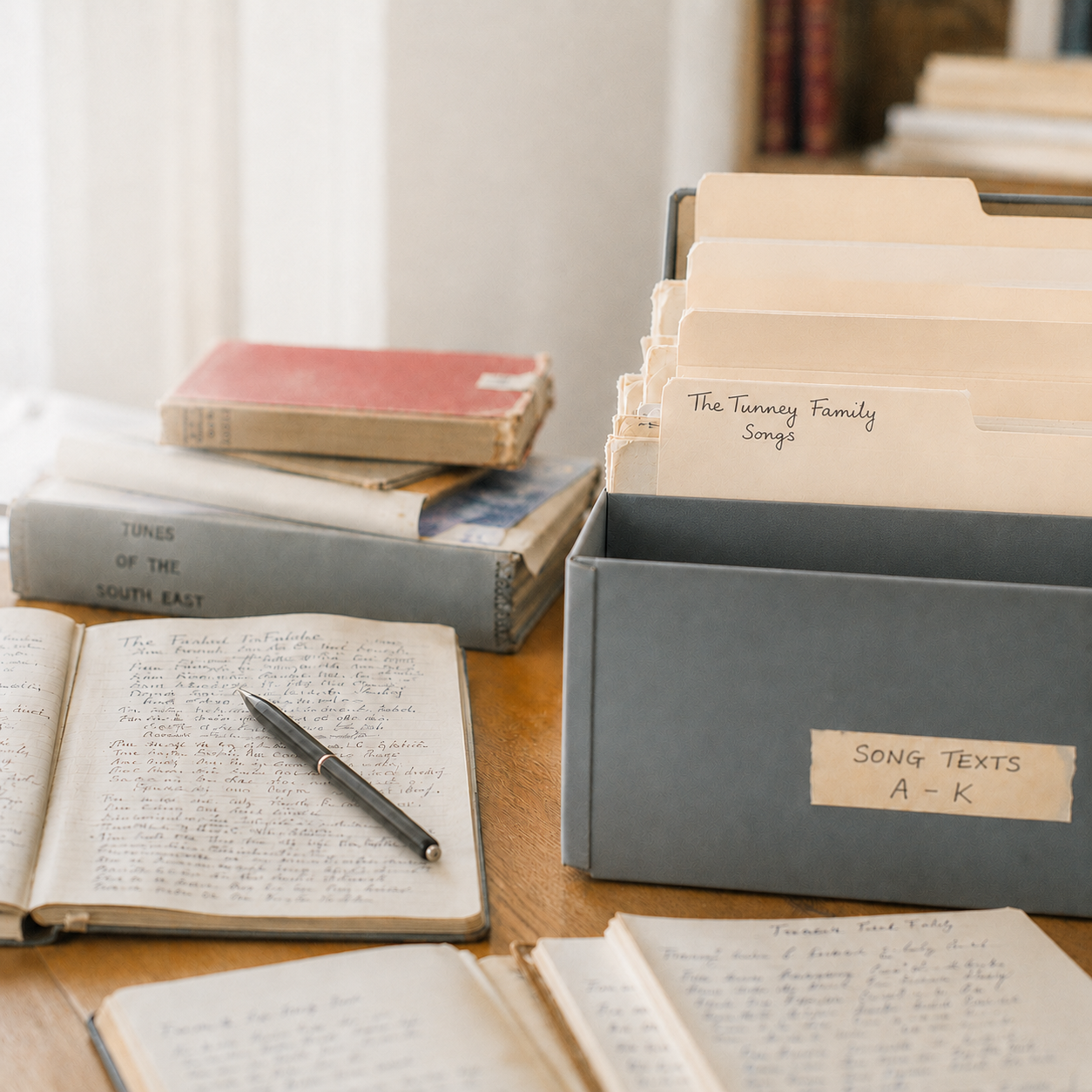
The Tunney Song Tradition Trust’s Archive of Song Texts preserves the words of traditional songs, offering a valuable resource for singers and anyone interested in the living song tradition.
Where the Linnets Sing 2026, developed by the Tunney Song Tradition Trust with Comhaltas Ceoltóirí Éireann, celebrates 75 Bliain ag Fás by bringing the original collection to a new online audience, enriched with fifteen additional tracks, eleven more voices and two further generations of the tradition.