My Bonny Blue-Eyed Lassie
Track 17
Notes on the Track (17)
Recorded: 1991Notes on the Song
Elisabeth (Bess) Cronin of Baile Mhúirne in West Cork sang this song for collectors such as Séamus Ennis and Peter Kennedy way back in the early 50s, and Séamus Ennis himself was heard in the 1970s singing a slightly different version.
Searching for a location for this song we have a choice between Mrs Cronin's Yarrow and Séamus Ennis’ (also John Tunney’s) Eochaill. Eochaill rhymes quite well with ‘behold her’ but the nightingale is not one of our indigenous birds, which prompts the thought that the song may not have originated here either; but, of course, the tune and style in this case are very true to Irish traditional artistry.
Song transmission is sometimes a curious but always a dynamic thing. I learned My Bonny Blue Eyed Lassie from a recording of Cathal McConnell that my sister Brigid made at Fleadh Cheoil na hÉireann in Buncrana 1976. I sing it word-for-word as he did that day. This is Cathal’s own story of how he learned it: ‘I got this song from a friend Lynn Murfin, who recorded Séamus Ennis singing it. Séamus sang Lines 3 & 4 incorrectly in Verse 2. Later I got the right words from the original recording of Elizabeth Cronin of Ballyvourney, Co. Cork, made in the 1940s or early 1950s’ (I Have Travelled this Country: Songs of Cathal McConnell, compiled by Gerry O’Connor, edited by Síle Boylan, 2011). So, really, we are all singing Bess Cronin’s version. (JT)
The Singers

John Tunney
Rec. 1991
The Song Texts
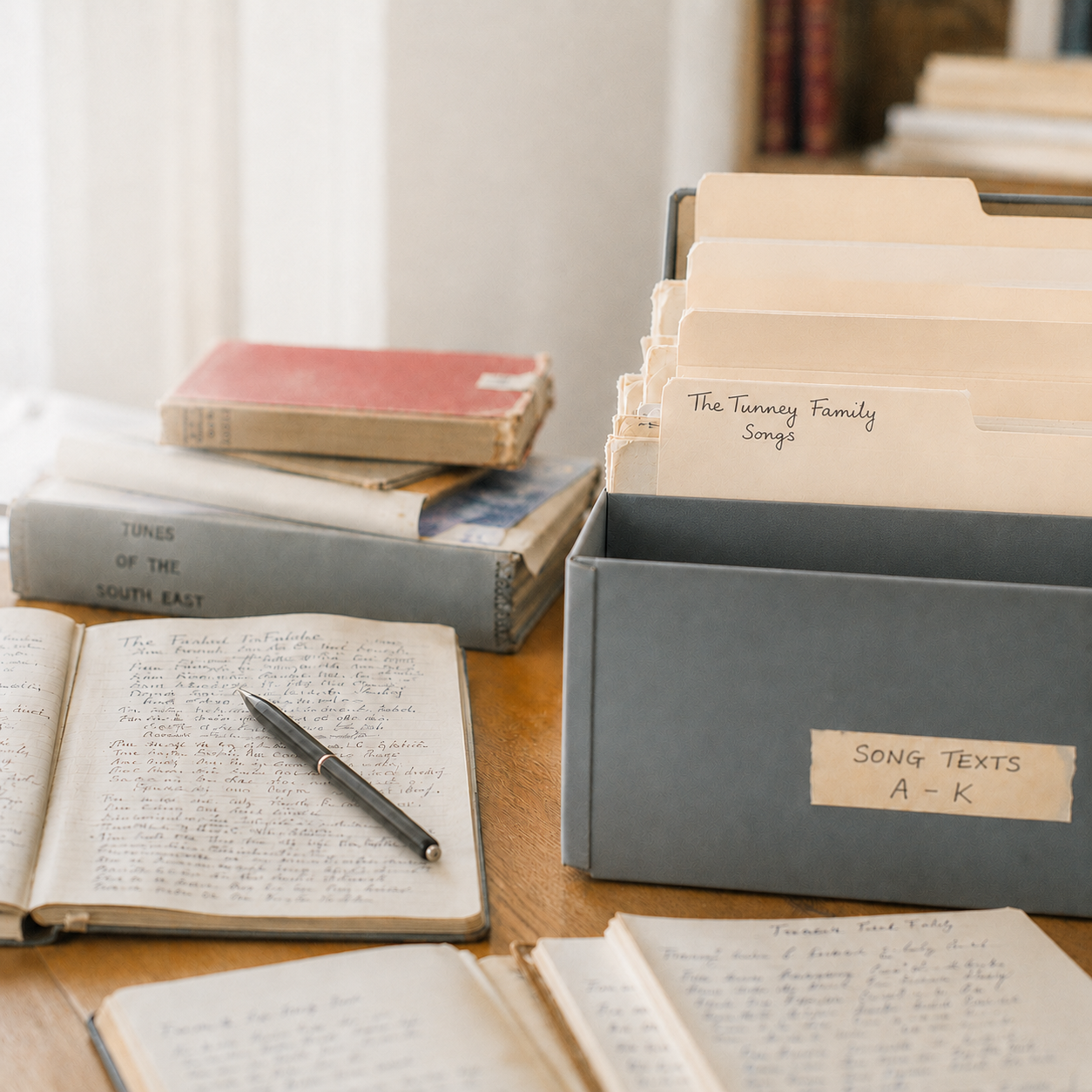
The Tunney Song Tradition Trust’s Archive of Song Texts preserves the words of traditional songs, offering a valuable resource for singers and anyone interested in the living song tradition.
Where the Linnets Sing 2026, developed by the Tunney Song Tradition Trust with Comhaltas Ceoltóirí Éireann, celebrates 75 Bliain ag Fás by bringing the original collection to a new online audience, enriched with fifteen additional tracks, eleven more voices and two further generations of the tradition.